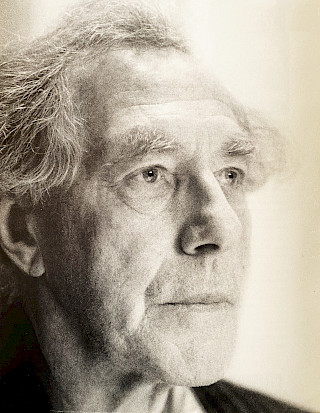
Günther Schwarberg – Commemorating the 100th anniversary of his birth
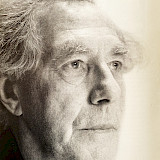
Günther Schwarberg was born on 14 October 1926 in Vegesack, near Bremen.
He started school when Hitler came to power and was conscripted as a soldier during the Second World War.
His childhood and youth were shaped by a deep aversion to the Nazis and to war. These experiences stayed with him throughout his life.
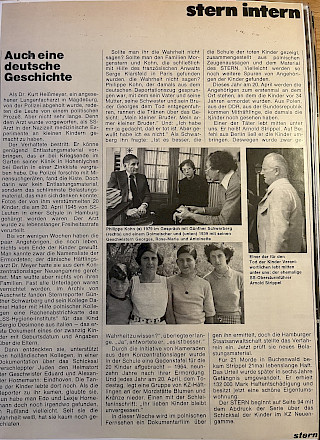
He became a journalist. The victims of National Socialism became the focus of his life’s work. Among other things, he worked for *Stern* magazine for 25 years. There, he wrote, for example, about the Majdanek trial and the sinking of the concentration camp ships *Cap Arcona* and *Thielbek* on 3 May 1945, in which around 7,000 concentration camp prisoners lost their lives.
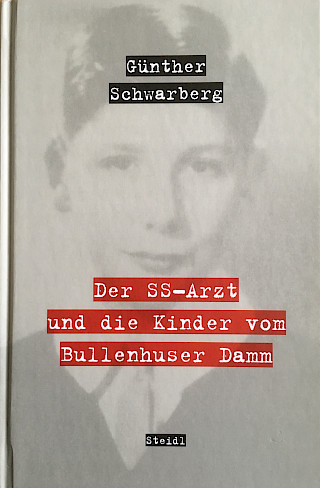
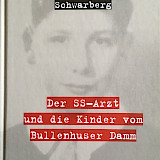
Günther Schwarberg regards the investigation into the history of twenty Jewish children, who were hanged on 20 April 1945 in the cellar of the school on Bullenhuser Damm, as the most important task of his life. And it all began by chance. In 1977, Günther Schwarberg came across two books that recounted the murder of the children on Bullenhuser Damm: Lord Russell of Liverpool’s *Scourge of Mankind*. After 1945, as a brigadier, he was responsible for the military history of the British Army. In his book *Unter Türmen und Masten*, the writer Willi Bredel tells the story of a fictional teacher, Kurt Mertens. When asked by his pupils whether there had once been a children’s concentration camp at their school, he told them about the murders.
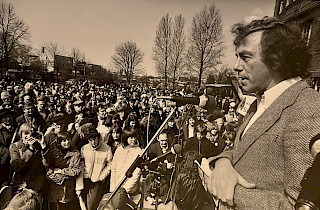
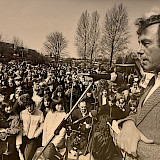
On 20 April 1977, Günther Schwarberg visits the cellar on Bullenhuser Damm for the first time. Former concentration camp prisoners and members of the Association of Victims of Nazi Persecution meet there every year to commemorate the event.
A wreath leans against the wall. The ribbon reads: ‘You dear children will never be forgotten.’ Günther Schwarberg takes up this thread and begins to search for the children. In the archives of the ‘Association of Victims of the Nazi Regime’ in Frankfurt, he finds photographs of the twenty children.
In January 1978, Günter Schwarberg received further photographs of the children, taken by an SS photographer, and the account of a captured Danish doctor and resistance fighter, Henry Meyer, who had secretly written down the children’s names. Using these photographs, he had missing persons posters printed in Polish, French, Dutch, Italian, Serbo-Croatian and English. He sent these to many countries, as well as to the public prosecutor’s office in Tel Aviv. There, Ella Kozlowski unpacked the parcel and recognised her cousin: Riwka Herszberg.
A researcher assisted Günther Schwarberg with his further investigations, finding the names of the Kohn and Morgenstern families in Parisian telephone directories. From many small clues, the story of the children from Bullenhuser Damm began to take shape.
In 1979, surviving relatives attended the memorial service in Hamburg on 20 April for the first time. Together with Günther Schwarberg and his wife Barbara Hüsing, they founded the association ‘Kinder vom Bullenhuser Damm e.V.’. They instructed Barbara Hüsing, as a solicitor, to file a criminal complaint against Arnold Strippel, a perpetrator of the events of 20 April 1945 who was still alive. The proceedings dragged on until 1987 and were discontinued due to the perpetrator’s permanent incapacity to stand trial.
A year earlier, Günther Schwarberg and Barbara Hüsing had organised an international tribunal comprising eminent legal experts, chaired by Martin Hirsch, a former judge at the Federal Constitutional Court. The tribunal examined the failure of the West German judiciary to address Nazi crimes and concluded that a state which allows the crimes of the Nazi regime to go unpunished is vulnerable to a resurgence of fascism.
In 1988, Günther Schwarberg and Barbara Hüsing became the first Germans to be awarded the Anne Frank Medal in the Netherlands.
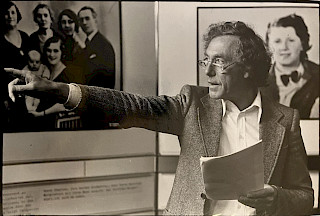
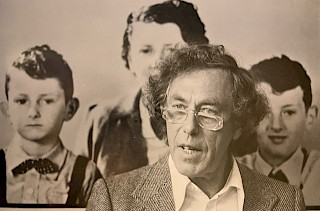
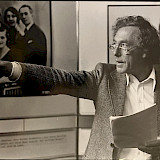
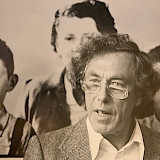
The work on behalf of the children of Bullenhuser Damm filled Günther Schwarberg’s life just as much as it did that of his wife, Barbara Hüsing. They gave many talks on the children’s lives and their murder, both to school classes and at universities. Günther Schwarberg was invited to numerous readings from his books, and time and again the couple guided large groups through the exhibition in the basement of the memorial.
Their contact with the bereaved families led to friendships, and the association increasingly became like a family.
Günther Schwarberg died on 3 December 2008. He will never be forgotten.
The Günther-Schwarberg-Weg in Hamburg’s Schnelsen district is also named in his honour.
But this story continues to this day….